by suprememarketing | Feb 18, 2026
Have you ever imagined waking up to fresh air, tending a garden, or enjoying the peace of wide-open land? For many, the idea of owning a hobby farm is more than just a dream — it’s a lifestyle.
But here’s the challenge: traditional mortgage loans aren’t always built for unique properties with acreage, barns, or agricultural elements. That’s why Supreme Lending is proud to offer our Hobby Farm Loan Program — designed to make country living possible.
What Is a Hobby Farm Loan?
Our Hobby Farm Loan is designed for borrowers who want more space than the average homebuyer. Whether it’s a few acres for gardening, a place for horses, or room to raise livestock, this program helps finance properties that don’t fit neatly into standard mortgage guidelines.
Program Highlights
- Loan amounts from $100,000 up to $2 million
- Primary residences and second homes eligible
- Purchase, rate/term, or cash-out refinance available
- Financing up to 95% LTV (depending on occupancy and loan size)
- Fixed-rate options: 15 & 30 years
- Minimum credit score: 680
- Debt-to-income ratio up to 43%
What Properties Qualify?
- Hobby farms (not full-scale commercial operations)
- At least 5 acres of land, or proof of $5,000 annual agricultural income if under 5 acres
- Homes in good condition with utilities in service
- Manufactured homes (doublewide or larger, meeting specific guidelines)
- Rural properties with barns, gardens, or space for small-scale agriculture
Why Choose Supreme Lending?
At Supreme Lending, we believe in enriching lives by helping borrowers achieve their unique homeownership dreams. With the Hobby Farm Loan Program, we’re opening doors to larger spaces, more freedom, and the country lifestyle many families are looking for.
Ready to Start Your Hobby Farm Journey?
If you’ve been searching for a home with acreage, barns, or land for your dream lifestyle, Supreme Lending is here to help.
Contact a Supreme Lending Loan Officer today to see how our Hobby Farm Loan Program can make your dream of country living a reality.

by Supreme Lending | Feb 14, 2025
If rising mortgage rates have you weighing your options, a 2-1 Temporary Interest Rate Buydown might be worth exploring. Supreme Lending offers this for eligible conventional, FHA, and VA loans, allowing for a lower interest rate in the first two years. This gives the homebuyer some breathing room upfront while getting settled.
Let’s take a closer look at how this program works and who it may benefit.
What is a 2-1 Temporary Buydown?
A temporary buydown allows borrowers to reduce their monthly mortgage payment with a lower interest rate for the first two years of the loan. This is made possible through a lump sum, sometimes called a “subsidy,” which is deposited into a buydown account and used to offset the mortgage payment during this period. These funds may come from various sources, including the lender, the property seller, or other interested parties.
With a 2-1 Buydown, your mortgage interest rate is reduced as follows:
- First Year: The rate is reduced by 2% from the original rate.
- Second Year: The rate is reduced by 1% from the original rate.
- After the second year: The interest rate returns to the original, full rate. The actual note rate and monthly payment you are obligated to pay are not reduced permanently. The full rate must be reflected on your mortgage documents, and the buydown funds will be applied only during the first two years.
How Does the 2-1 Buydown Help You?
If you’re concerned about higher monthly payments right after purchasing a home, the 2-1 Buydown may offer temporary assistance. By lowering the mortgage rate for the first two years, this program provides initial relief, allowing for financial adjustment during the early stages of homeownership.
For example, if you’re starting a new job or expect your income to rise in the near future, this buydown option may give you time to transition before your mortgage payments increase to the full amount.
Who Might Benefit from a 2-1 Buydown?
This program may be ideal for:
- First-Time Homebuyers: The reduced payments in the first two years may provide a smoother transition into homeownership.
- Buyers with Fluctuating Income: If you anticipate an increase in earnings, the temporary lower payments may offer flexibility.
- Homebuyers Seeking Immediate Relief: Lower initial payments may help with budgeting during the early years of homeownership.
What’s the Catch?
Like any loan program, there are factors to consider. The 2-1 Buydown requires additional upfront funds, typically provided by the seller, to cover the cost of reducing the interest rate for the first two years.
While this arrangement provides short-term relief, it’s important to plan ahead for when the interest rate returns to the full amount in the third year.
Why Choose Supreme Lending?
At Supreme Lending is committed to offering flexible mortgage solutions designed to meet your needs. The 2-1 Temporary Buydown is one of many options available to help create a smoother homebuying experience.
Wanting to explore how this program works or discuss other home loan options? Our team is ready to assist – contact Supreme Lending today to learn more.

by Supreme Lending | Nov 7, 2024
For aspiring homeowners and first-time buyers, many questions can arise about the mortgage process. What credit score do you need to qualify? How much down payment is required? Answers are based on several factors including the property, purchase price, and, most importantly, the mortgage type.
Here’s a breakdown to simplify the numbers and help you understand what you need to open the door to your dream home depending on common mortgage types: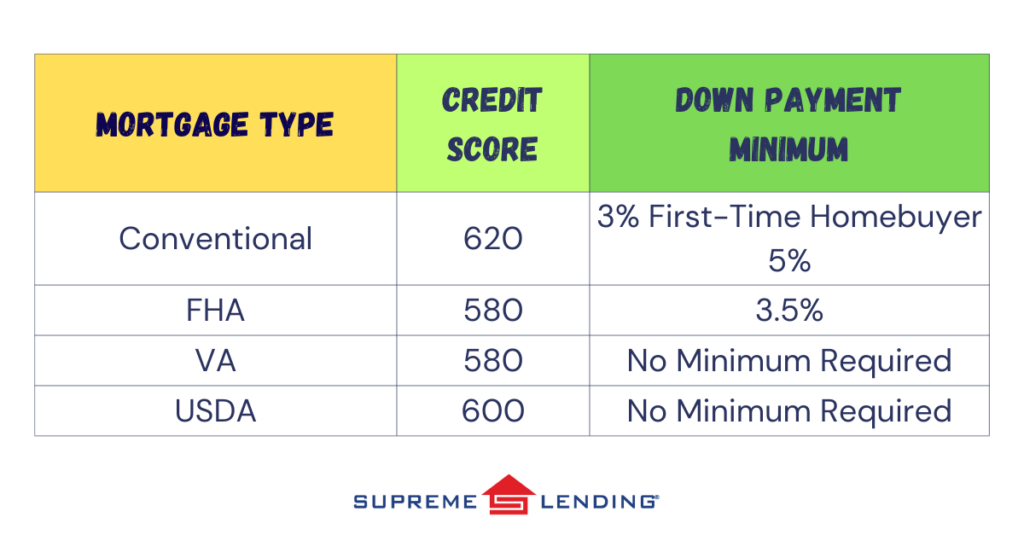
What Is a Credit Score?
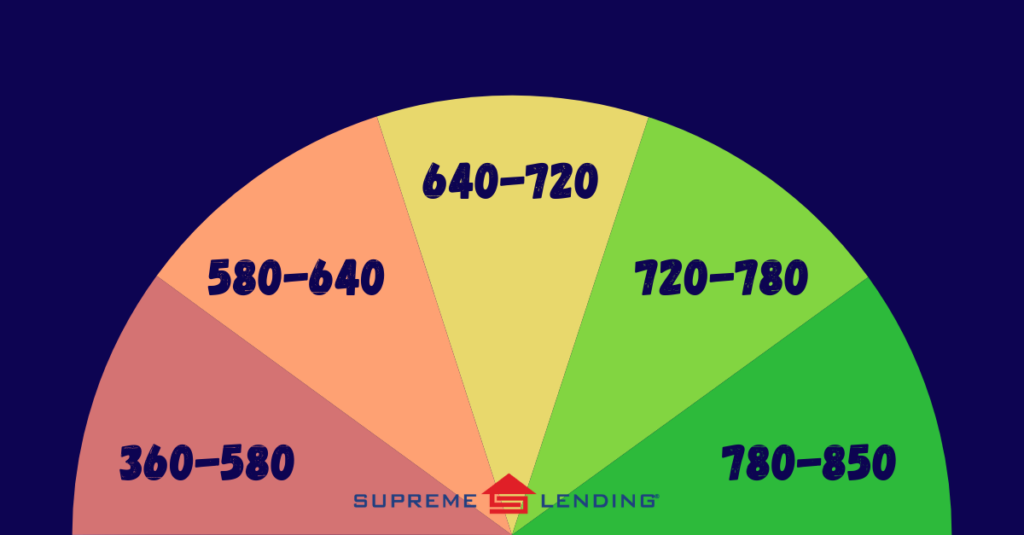
Commonly determined by FICO® score, credit scores are calculated using the borrower’s financial background information such as payment history, credit utilization, length of credit history, types of credit in use, and recent credit behavior. The average credit score in the United States in 2023 was 715, according to Experian data.
Down Payment Assistance Options
If a homebuyer doesn’t have the required minimum down payment or would like to access more financing, Supreme Lending offers several down payment assistance options for qualified buyers. This can also help first-time buyers open the door to homeownership. Guidelines and eligibility vary depending on the program. For example, the Supreme Dream program offers down payment assistance in the form of a fully forgivable second loan and requires a minimum credit score of 620. Ask your Supreme Lending Loan Officer about qualified assistance programs.
Understanding credit score and down payment requirements for different types of mortgages is crucial for prospective homebuyers. While each loan type has its own guidelines, maintaining a good credit score and having sufficient funds for upfront costs at closing remains a common denominator for securing favorable terms and interest rates. By proactively managing your credit and staying informed about your options, you can navigate the mortgage process with confidence on your journey to homeownership.
Contact your local Supreme Lending branch to get pre-qualified and learn about your home financing options.
by Supreme Lending | Feb 12, 2024
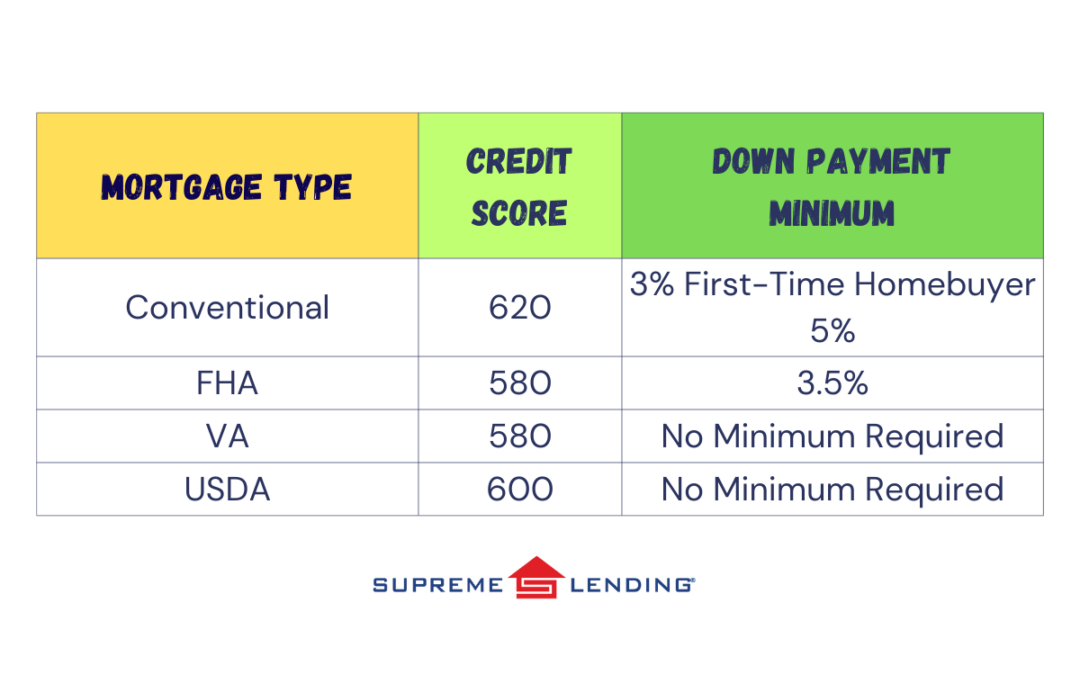
For aspiring homeowners and first-time buyers, many questions can arise about the mortgage process. What credit score do you need to qualify? How much down payment is required? Answers are based on several factors including the property, purchase price, and, most importantly, the mortgage type.
Here’s a breakdown to simplify the numbers and help you understand what you need to open the door to your dream home depending on common mortgage types:
What Is a Credit Score?
Commonly determined by FICO® score, credit scores are calculated using the borrower’s financial background information such as payment history, credit utilization, length of credit history, types of credit in use, and recent credit behavior. The average credit score in the United States in 2023 was 715, according to Experian data.
Down Payment Assistance Options
If a homebuyer doesn’t have the required minimum down payment or would like to access more financing, Supreme Lending offers several down payment assistance options for qualified buyers. This can also help first-time buyers open the door to homeownership. Guidelines and eligibility vary depending on the program. For example, the Supreme Dream program offers down payment assistance in the form of a fully forgivable second loan and requires a minimum credit score of 620. Ask your Supreme Lending Loan Officer about qualified assistance programs.
Understanding credit score and down payment requirements for different types of mortgages is crucial for prospective homebuyers. While each loan type has its own guidelines, maintaining a good credit score and having sufficient funds for upfront costs at closing remains a common denominator for securing favorable terms and interest rates. By proactively managing your credit and staying informed about your options, you can navigate the mortgage process with confidence on your journey to homeownership.
Contact your local Supreme Lending branch to get pre-qualified and learn about your home financing options.