by Supreme Lending | Aug 6, 2024

Refinancing* your mortgage may be a strategic financial move that may unlock potential savings, but a common question for homeowners is, how soon can you refinance? Timing is everything. Whether you’re looking to lower your monthly mortgage payments, pay off your home loan quicker, or tap into your home equity for extra cash, knowing when to refinance is important. Let’s dive into the basics of refinancing, how soon you can refinance depending on the loan type, and how to determine the ideal time to consider the option.
Understanding the Basics of Refinancing
Refinancing involves taking out a new mortgage with different terms and using it to pay off your existing loan. The process may result in various benefits:
- Lower Interest Rates. If market conditions cause rates to drop since you purchased your original home loan, refinancing at a lower rate may lead to significant savings over the life of the loan.
- Reduce Monthly Payments. Securing a lower interest rate or a longer loan term may also decrease your monthly mortgage payments.
- Shorter Loan Term. If you can pay off your mortgage much sooner due to an increase in income, for example, it may make sense to refinance into a shorter term.
- Switch Loan Type. If you initially choose an Adjustable-Rate Mortgage, also known as an ARM loan, you may be able to refinance into a fixed-rate loan before the ARM rate adjusts. This may save you interest costs in the long run.
- Cash Out on Your Equity. When refinancing, you might opt for a cash-out refi loan. This allows you to tap into your equity, which is the portion of your home’s value that is yours.
- Payoff Higher-Interest Debts. You can use the cash from your equity to pay other debts such as high-interest credit cards, car loans, or student loans.
- Eliminate Private Mortgage Insurance. In some cases, you may have to pay a monthly fee for mortgage insurance. Once you reach a certain equity threshold, some lenders allow you to remove the private mortgage insurance by refinancing.
Timing Guidelines Based on Loan Type
The timing for when you can refinance your home depends on the lender and type of loan. It’s common for mortgage refinances to require a waiting period, or a seasoning period. Here are some general guidelines on how soon you can refinance a mortgage:
Conventional Loans
For conventional loans, most lenders require at least six months from your original closing date before you can refinance. This waiting period allows lenders to assess your payment history and ensure that you’re not a high-risk borrower. If you use another lender to refinance, you may be able to do a rate-and-term refinance without a seasoning period.
FHA Loans
For FHA loans, which are insured by the U.S. government’s Federal Housing Administration (FHA), you may be able to get an FHA Streamline Refinance. This simplifies the process and requires less documentation. However, you can’t get a streamline refinance until after 210 days from the closing date. You must also have made at least six months of on-time payments.
VA Loans
Similar to FHA, VA loans also offer a streamlined refinancing option known as an Interest Rate Reduction Refinance Loan (IRRRL). You’ll have to wait 210 days from the closing date of your existing VA loan and make six consecutive on-time payments to be eligible.
USDA Loans
These types of loans for rural areas are similar to those of FHA and VA loans. You’ll typically need to wait for 180 days or 12 months (depending on the type of refinancing) and establish a history of making on-time payments for the past six months to one year depending on the program.
Cash-Out Refi Loans
Additionally, how soon can you refinance with a cash-out refi? For this option, you typically need to have occupied the home as a primary residence for at least 12 months.
Why Timing Matters
Prepayment Penalties and Other Fees
A mortgage prepayment penalty is a fee charged by lenders if you pay off your mortgage early. Essentially, this helps compensate lenders for the interest income they lose when the loan is paid off early. When refinancing, it’s important to know if your current mortgage has a penalty or other fees associated to paying off the loan early. The cost of the fee may outweigh the benefits of refinancing.
Down Payment Assistance
Additionally, if you used down payment assistance for your current mortgage, check the terms of that aid. For some programs, refinancing too soon might require you to repay the assistance amount. Other programs may even require repayment of the down payment assistance amount when you refinance regardless of how long you’ve had the loan. This could impact any potential savings from refinancing.
Best Practices and Considerations
When deciding whether it’s a good time to refinance, here are a few things to keep in mind:
- Interest Rates. Monitor the rate and market trends if your primary goal is to refinance with a lower interest rate. You can always reach out to your local loan officer at Supreme Lending to help determine what your potential refinance rate may be.
- Closing Costs. Just like a traditional mortgage, refinancing includes closing costs that can range from 2% to 6% of the loan amount. Be prepared so you’re not surprised at the closing table.
- Break-even Point. Calculate the break-even point by determining when the costs of refinancing will be outweighed by the potential savings. Basically, it’s when your investment in refinancing will start to pay off.
- Loan Term. Consider whether you want to shorten your loan term to save on interest over the life of the loan or extend it for potentially lower monthly payments.
- Credit Score. A stronger credit score may qualify you for more favorable rates, so it’s worth monitoring your credit and making regular, on-time payments.
- Financial Goals. One of the most important aspects of refinancing is to make sure that a refinance aligns with your short- and long-term financial goals. Are you looking to minimize other debts, invest in renovations, or change your loan type?
Is Now the Right Time to Refi?
So how soon can you refinance your mortgage? Ultimately, it comes down to the loan-specific guidelines and your personal financial goals. It’s essential that you are well-informed, understand the refinancing process, and know all the factors that will go into your new refinanced loan. At Supreme Lending, we’re committed to helping you navigate your refinancing journey with ease and confidence.
Ready to explore your refinancing options? Contact us today to get started.
*By refinancing an existing loan, total finance charges may be higher over the life of the loan.
by Supreme Lending | Aug 1, 2024

When someone asks if it’s possible to add renovation costs to mortgage, the simple answer is yes! When buying a home, people dream of finding the perfect property that checks off all their boxes. However, sometimes the ideal property may need a little work to become that dream home. This is where renovation loans come in. By adding renovation costs to your mortgage, you can finance both the purchase of your home and the necessary improvements into a single loan. Read on to learn more about renovation loan options, benefits, and frequently asked questions.
Types of Renovation Loans
There are several loan programs to consider that can add renovation costs to your mortgage:
- FHA 203(k). This renovation program is an FHA loan, insured by the Federal Housing Administration. There are two options depending on the extent of the home remodel or repairs. The Limited 203(k) is for more minor updates that ensure the home is safe and functional and can include basic cosmetic improvements. The Standard 203(k) option offers more flexibility and larger scale renovations, such as structural foundation or adding square footage. Only primary residences are eligible. Click here to read more about the FHA 203(k) Renovation Loan.
- Fannie Mae HomeStyle®. This is a Conventional loan option to add renovation costs to mortgage. It includes home improvements that are permanently affixed to the property and add value, including luxury items such as high-end flooring, decks, fencing, a pool, etc. Unlike the FHA 203(k), this program can also be used toward qualified second homes and investment properties.
- VA Renovation. This renovation loan is for eligible military Veterans, active duty personnel, and some surviving spouses. It offers the same benefits as VA loans, such as no down payment requirements and lower closing costs, plus the ability to include certain home repairs into a single, affordable mortgage.
- Supreme Dream 203(k). Another exciting renovation loan program that Supreme Lending offers is the FHA 203(k) loan, as noted above, combined with the Supreme Dream down payment assistance resulting in less upfront costs.
How Renovation Loans Work
- Determine Your Renovation Needs. Assess the scope of your renovation project and obtain estimates from contractors to understand the anticipated costs.
- Loan Application. Apply for a renovation loan with a lender. You will need to provide detailed renovation plans. At Supreme Lending, we have a dedicated construction lending team to support all renovation loans for a smooth process.
- Loan Approval. Once approved, the loan amount is based on the projected value of your home after the renovations are completed.
- Renovation Process. Funds are typically disbursed in stages as the renovation progresses ensuring that contractors are paid, and the work is successfully completed.
- Final Inspection. After the renovations are finalized, a final inspection is typically required to verify that the work meets the loan requirements, and any remaining funds are released.
Frequently Asked Questions
Can I add renovation costs to any type of mortgage?
Not all mortgage types allow for renovation costs to be added. Specific loans, such as the programs listed above, are specifically designed to fund renovations and have additional steps and guidelines to follow.
How are renovation costs disbursed with a renovation loan?
With a renovation loan, funds for the purchase of the property are typically disbursed at closing. The renovation funds are placed in an escrow account to be paid out as repairs are completed.
How are renovation loans approved?
Your lender’s underwriting department will help approve the loan application and make sure all guidelines and requirements are met. This includes reviewing the home’s value after the renovations are made. The renovation schedule and documentation are also evaluated to ensure a seamless process.
Are there limits on the amount someone can borrow for renovations?
Yes. Each loan type has specific limits depending on the program. For example, an FHA 203(k) Limited loan currently has a maximum of $35,000* repair escrow amount to use toward the contractor’s costs and renovation fees. In turn, an FHA 203(k) Standard depends on the property’s FHA county loan limit. For Conventional renovation loans, the maximum renovation cost is typically up to 75% of the after-improved home value.
*Note: The FHA 203(k) Limited options will be increasing its maximum limit for renovation costs to $75,000 on or after November 4, 2024.
Click here for a complete guide to home renovation loans that includes a detailed comparison of FHA 203(k) and Conventional HomeStyle® loans.
Want to learn more about how to add renovation costs to your mortgage? Get started in creating your dream home with the help of Supreme Lending. We’re here to help every step of the way.
by Supreme Lending | Jul 17, 2024
Download a copy of the refinance checklist here.

If you’re considering refinancing* your mortgage, there are several ways you can prepare beforehand to ensure a smooth, timely transaction. The refinancing process requires careful planning and organization, starting with gathering the necessary documentation. Just like applying for a traditional mortgage, lenders will require several documents to refi your loan. They’ll need to review your existing mortgage, finances, debts, and capacity to repay the loan. Here’s a general breakdown of what you’ll need to prepare along with a refinance checklist.
Understanding Your Goals of Refinancing
To refinance an existing mortgage essentially involves replacing it with a new one. The most important step of refinancing is to understand the outcome of your new home loan. Whether you’re looking to change the loan term, reduce the interest rate, or take out cash from your home equity, using a refinance calculator can help you get an estimate of associated costs and new monthly payment.
Refinance Checklist
When you’re ready to begin the refinancing process, it’s time to collect the documents needed to refinance. These include details to help lenders verify your income, current mortgage, debts, assets, and other documents depending on individual situations. Here’s a refinance checklist of basic documents to help guide you in preparing to refinance.
Income Documents
- Pay stubs, past 30 days
- W-2s, past two years
- Tax returns, past two years, if self-employed
- Profit and loss statement, if self-employed
- Social security, pension, disability, or other income verification, if applicable
Home and Mortgage Documents
- Mortgage statement
- Homeowners insurance declarations page
- Homeowners association (HOA) statements, if applicable
Identification
- Driver’s license or state-issued I.D.
- Social Security card
Debt Statements, If Applicable
- Credit card statements
- Student loan balance
- Car loan balance
- Personal loan balance
- Home equity loan
Asset Documents
- Bank statements (checking and/or savings accounts)
- Investment account statements
- Retirement account statements
- Proof of any large deposits or gift funds, if applicable
- Other asset statements
Other Situational Documents, If Applicable
- Bankruptcy documentation
- Divorce decree
- Child support or alimony payments
- Credit or employment gap explanation letter, if requested
- Proof of any rental income collected from investment properties
Simplify Your Refinancing with Supreme Lending
Navigating the refinancing process may seem overwhelming at first, but with Supreme Lending by your side, our experienced mortgage professionals can help guide you every step of the way. From ensuring you gather all necessary documents on the refinance checklist to providing timely updates on your loan status, we’re committed to providing a seamless mortgage experience.
Ready to take the next step in refinancing? Contact your local Supreme Lending branch to get started.
*By refinancing an existing loan, total finance charges may be higher over the life of the loan.
by Supreme Lending | Jun 28, 2024
Understanding How to Use a Refinance Calculator

Refinancing a mortgage can be a strategic tool for many homeowners, but determining whether it’s the right move requires careful consideration and calculation. A refinance calculator can help you understand the potential costs and benefits of refinancing. Here’s an overview of what refinancing is, common reasons homeowners may consider refinancing, and how to use a refinance calculator to get an initial idea of potential related costs.
What Is Refinancing?
Refinancing a mortgage involves replacing an existing home loan with a new one, usually with different terms. The primary goals of refinancing are to change the loan term, reduce the interest rate, or tap into your home’s equity for cash. By refinancing, homeowners can potentially lower their monthly payments, pay off the mortgage sooner, or secure funds to use for other significant expenses. A refinance calculator can help breakdown the costs of refinancing and new estimated monthly payments.
Why Refi Today?
Even in today’s higher interest rate environment, there are still several reasons people may consider refinancing.
- Shorten Loan Term. Refinancing to a shorter loan term, for example going from a 30-year to a 15-year term, can help pay off the mortgage faster and save in interest over the life of the loan.
- Change Loan Type. Switching from an adjustable-rate mortgage (ARM) to a fixed-rate can provide more stability with consistent monthly payments. Borrowers may also refinance to change from a government-insured FHA loan to a Conventional mortgage or other eligible loan type.
- Cash-out Refinancing. This option allows borrowers to use the equity they’ve built in their home and receive the difference in cash to use for other expenses, such as home renovation projects, tuition, or additional large expenses.
- Lower Interest Rates. Securing a lower interest rate can reduce monthly payments and potentially save thousands of dollars in the long term.
- Life Changes. Major life events such as divorce or death may require refinancing to remove a co-signer from a loan. It’s important for married homebuyers to understand spousal states and ownership rights.
Using a Refinance Calculator**
A refinance calculator is a useful tool to help you understand and estimate potential costs associated with refinancing your current mortgage. Here are general steps to use a refinance calculator effectively.
1. Go to Supreme Lending’s online refinance calculator at www.SupremeLending.com > Learn > Calculators > Mortgage Refinance Calculator.
2. Input Current Loan Details, including the original loan balance, appraised value, interest rate, and loan terms.
3. Enter New Loan Information, including the proposed new mortgage terms, interest rate, and closing costs.
4. Calculate Monthly Payments. With the provided mortgage information, the calculator will provide an estimate of your new mortgage costs and monthly payment.
5. Compare Costs and Savings. The refinance calculator can help you review potential savings and total interest paid for the life of the loan. Consider the break-even point, which is the time it takes for your savings to cover the refinancing costs.
6. Evaluate Additional Factors. Consider any pre-payment penalties or other fees that may be applied to the current loan and the impact of extending or shortening the loan term. Additionally, if you used a down payment assistance program for your initial mortgage, be sure to refer back to the agreed upon terms. In some cases, the assistance may need to be paid back if refinancing before a specified period of time.
Calculate Refinancing Costs
When using a refinance calculator, it’s important to review associated costs to get an accurate picture of whether refinancing may be beneficial. Common refinancing costs include:
- Application Fee. This fee is charged to process the loan application.
- Origination Fee. The lender may charge a fee to process and originate the loan.
- Appraisal Fee. This is the cost of having a home appraised to determine its market value.
- Title Insurance and Search Fees. These are costs associated with verifying the home’s ownership and ensuring there are no outstanding claims on the property.
- Closing Costs. Other fees and charges may be included that can typically amount to 2-5% of the loan amount.
Determine Monthly Payments
The refinance calculator can also help you determine new estimated monthly payments. By comparing your current payment and the new projected calculation, you can see the impact on your loan and plan your budget accordingly. If the new payment is significantly lower, refinancing may be a great option. If the new payment is higher due to a shorter loan term or other factors, you may need to decide if the long-term benefits outweigh the upfront refinancing costs.
Refinancing a mortgage may offer benefits, but it’s essential to understand the costs and new loan terms involved. A refinance calculator may help you make an informed decision with a comparison of your current mortgage and proposed new loan. Take a step further and get pre-qualified with Supreme Lending today. Let us help you make the most of homeownership and explore your mortgage and refinancing options.
*By refinancing an existing loan, total finance charges may be higher over the life of the loan.
**Results received from this calculator are designed for comparative purposes only, and accuracy is not guaranteed. Supreme Lending is not responsible for any errors, omissions, or misrepresentations.
by Supreme Lending | Jun 7, 2024
Your Guide to Prepare Your Home for Hurricane Season and Severe Weather

Homeownership is a considerable, rewarding experience, offering a place of comfort and security. However, natural disasters are inevitable, so it’s important to keep your home safe and protected in the event of severe weather. HousingWire reported that nearly more than 32.7 million residential properties from Texas to Maine may be at risk of moderate or severe damage this year. To keep your home and family safe, here are seven homeownership tips to prepare your home for hurricane season.
1. Review and Update Your Insurance Policies.
Regularly assess your homeowners and flood insurance policies to ensure you’re adequately covered for potential damage. Make any necessary updates to safeguard your home, especially during hurricane season.
2. Assess the Vulnerability of Your Home.
As you prepare your home for hurricane season, evaluate the current condition of your property. Carefully examine windows, exterior doors, the roof, and nearby trees. This will help you prioritize your preparation efforts and focus on reinforcing any vulnerable areas on your property.
3. Have an Emergency Plan.
Create an emergency plan for your household, including your pets. This should include evacuation routes, shelter sites, an emergency kit of essential food and supplies, and a list of important contacts. Ensure all family members are familiar with the plan.
4. Protect Windows and Doors.
Homeowners in hurricane or tornado-prone areas can install storm shutters or impact resistant glass to help prevent breakage. Plywood can be a temporary solution if these are not available. Another important step to prepare your home for hurricane season is to check for and seal any gaps or cracks around windows and doors. This can help minimize damage from wind-driven rain.
5. Keep Trees Trimmed.
Preparing your home for hurricane season also includes yard maintenance. Dead or overgrown tree limbs are more at risk of breaking and falling. Undergo regular tree service by trimming and removing any hazardous limbs, especially if they’re over the roof of your home. This simple preventive measure could save you from potentially costly repairs, ensure the safety of your property, and support your landscaping.
6. Secure Outdoor Elements.
In the event of possible high winds, make sure any outdoor furniture and grills are secured. Keep umbrellas closed and fold up chairs. You can use furniture and grill covers to protect them from excess rainwater. Bring in more sensitive items such as potted plants, hammocks, and other items that could be displaced in high winds.
7. Reinforce the Roof.
This may be one of the most important steps to prepare your home for hurricane season and may even enhance your home’s value. Be sure to carefully inspect your roof for any loose or damaged shingles, leaks, cracks, rust, or decay. Promptly repair any roof damage to protect the home’s structural integrity. It’s crucial to address any minor roof issues so they don’t escalate into major problems down the road. If a large roof restoration is needed, you may consider a home renovation loan to help fund the project.
BONUS. Plan Backup Power Sources.
If your property is in an area known for frequent storms and power outages, consider adding a generator or heavy-duty battery in the event the power goes out. Have portable phone chargers and power banks readily available. Additionally, keep matches and candles on hand to provide extra lighting if needed.
As you prepare your home for hurricane season, remember that your home is a sanctuary – a place where memories are made and cherished. By taking these proactive steps, you not only protect your investment but also ensure your property is safe. Homeownership is a rewarding experience, and with the right preparation, you can face any storm with confidence and peace of mind.
by Supreme Lending | May 31, 2024
The Ultimate Mortgage DTI Handbook
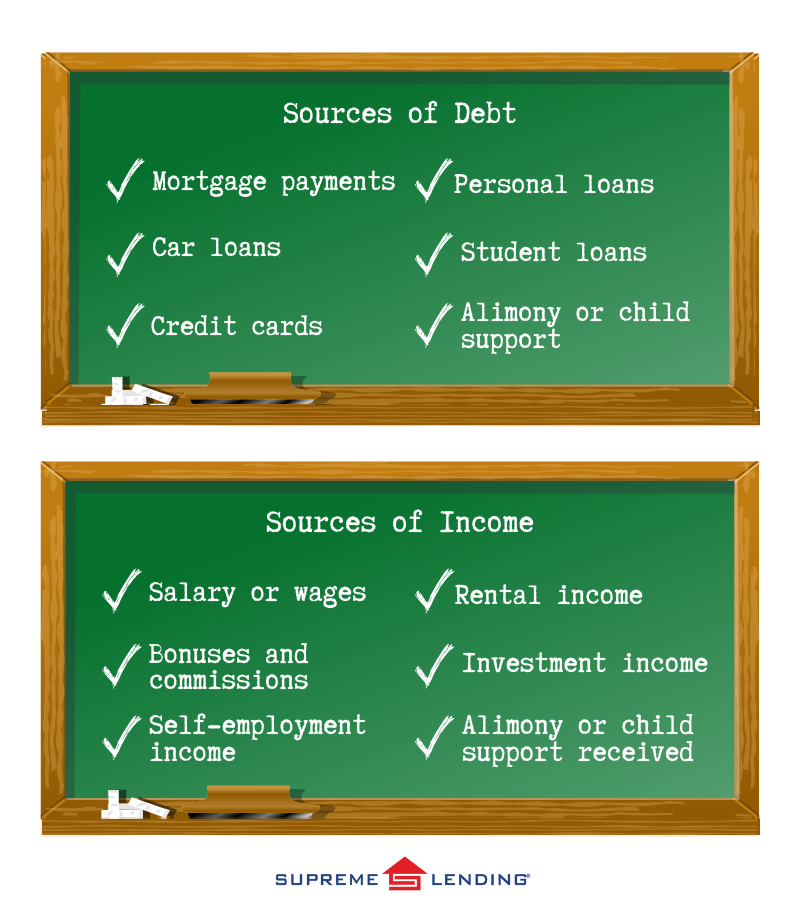
When it comes to securing a mortgage, understanding your finances has never been more important. One of the most important metrics lenders use when evaluating a borrower’s eligibility for a mortgage is Debt-to-Income ratio, commonly known as DTI. Let’s dive into what exactly mortgage DTI is, how it’s used, what sources of debt and income are considered, and what establishes a fair or good DTI. Plus, we’ll offer some helpful tips for potential homebuyers on understanding their DTI.
What Is Debt-to-Income (DTI) Ratio?
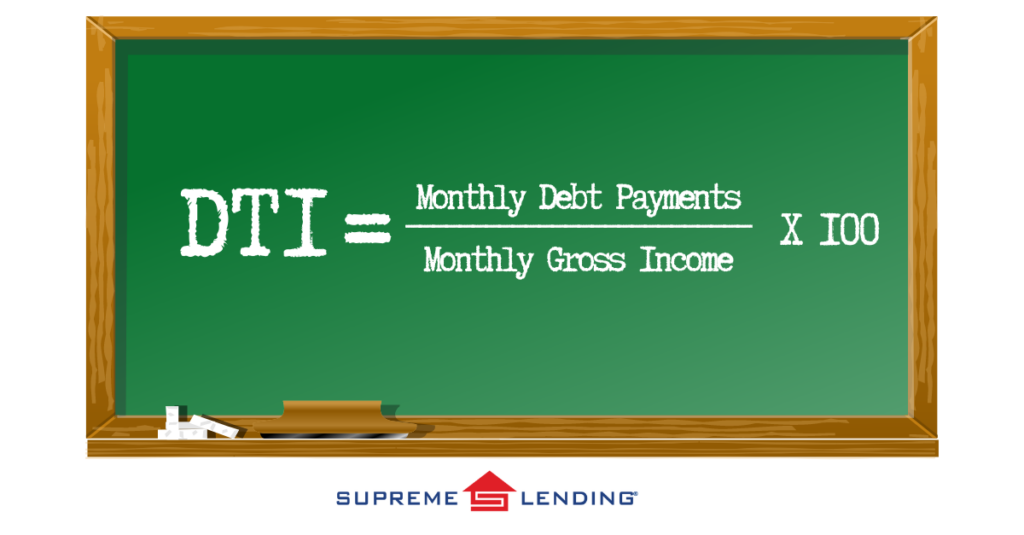
DTI is a financing metric that compares an individual’s monthly debt payments to their gross monthly income. Essentially, it measures the percentage of your income that goes toward paying off debts. Lenders use DTI to assess a borrower’s ability to make monthly payments to repay the loan. DTI is calculated by dividing your total monthly debt payments by your gross monthly income and multiplying the result by 100 to get the ratio percentage.
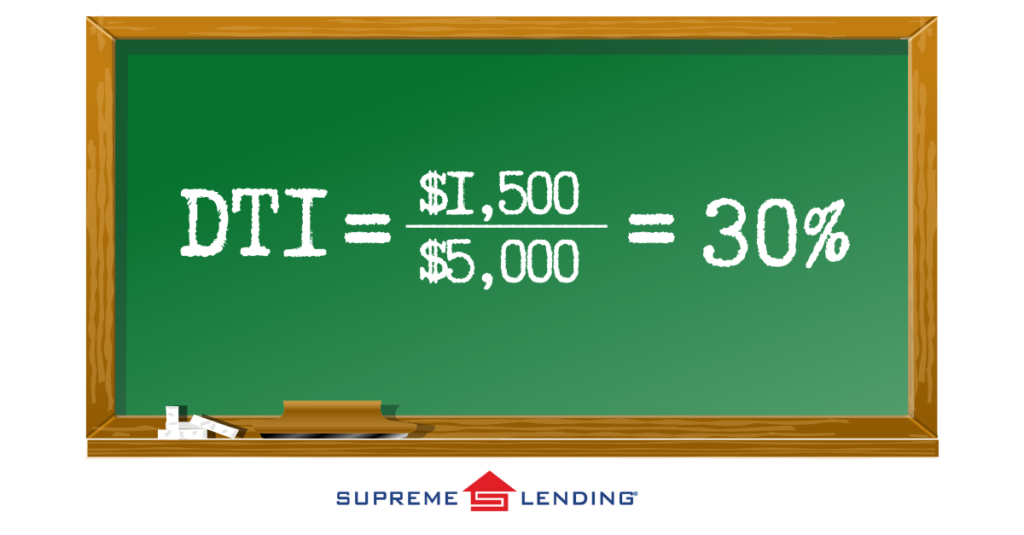
For example, if you have $1,500 in monthly debt payments and a gross monthly income of $5,000, your DTI would be 30%, as calculated below:
How DTI Is Used to Determine Mortgage Eligibility
Lenders look at your DTI to evaluate your ability to take on additional debt in the form of a mortgage. A lower DTI indicates that you have a good balance between debt and income, resulting in a more attractive and capable buyer. There are DTI thresholds that borrowers will need to meet, which can vary by lender or specified by the loan program guidelines.
Types of Mortgage DTI
- Front-end DTI: Also called a housing ratio or mortgage-to-income, this ratio only calculates housing-related expenses, such as the monthly mortgage payment, property taxes, homeowners’ insurance premiums, and homeowners association fees, if applicable, relative to your gross monthly income.
- Back-end DTI: This ratio includes all your monthly debt obligations, such as credit card payments, car loan payments, and student loan debt, in addition to the housing-related debt. Lenders typically focus more on back-end DTI when evaluating a buyer’s capability to repay a loan as it provides a clearer picture of their financial responsibilities.
Sources of Debt and Income Considered
What Is Considered a Favorable DTI?
A good DTI ratio for a mortgage depends on the type of loan and the lender. Most lenders prefer a back-end DTI of around 36% or less, though some may accept higher ratios, especially for borrowers with strong credit scores or significant assets.
Helpful Mortgage DTI Tips for Potential Homebuyers
1. Avoid New Debt
Before applying for a mortgage, calculate your current DTI to give you a rough understanding of where you stand. This will help identify if you need to make any adjustments to potentially improve your DTI ratio before deciding to purchase a home.
2. Reduce Outstanding Debts
Paying down existing debts can significantly improve your DTI. Consider focusing on reducing or eliminating higher interest debts like credit card balances first.
3. Increase Your Income
Look for opportunities to boost your income. This could be through a salary increase, getting a higher-paying job, adding a part-time gig, or exploring other income sources.
4. Avoid New Debt
Refrain from taking on new debt before applying for a mortgage and during the loan approval process. New loans or credit lines may have an impact on your DTI and mortgage eligibility.
5. Seek Professional Advice
Consult with a financial professional for personalized guidance or a loan officer to get a better understanding of your DTI and loan program requirements. There may be other mortgage options better suited for you depending on your goals, such as Debt Service Coverage Ratio (DSCR) loans for investment properties that don’t use DTI.
6. Consider a Co-Signer
If your DTI is in the higher range, you may benefit from having a co-signer who has a higher income or less debt to contribute.
7. Understand Loan Programs
Guidelines and criteria to qualify for a mortgage vary depending on the program and lender. For example, FHA loans typically have more lenient DTI requirements than Conventional loans. Work with our team at Supreme Lending to explore a variety of different mortgage options and find the one best fit for you.
Managing Your Debt-to-Income Ratio
Understanding mortgage DTI and your Debt-to-Income ratio is essential for navigating the loan process. By managing your DTI and making informed decisions, you may potentially improve your mortgage eligibility and chances of securing your dream home.
Contact Supreme Lending to learn more about how we can help you achieve your homeownership goals with confidence.
Related articles: